
Angelique Kerber – Why defeats can lead to top performance
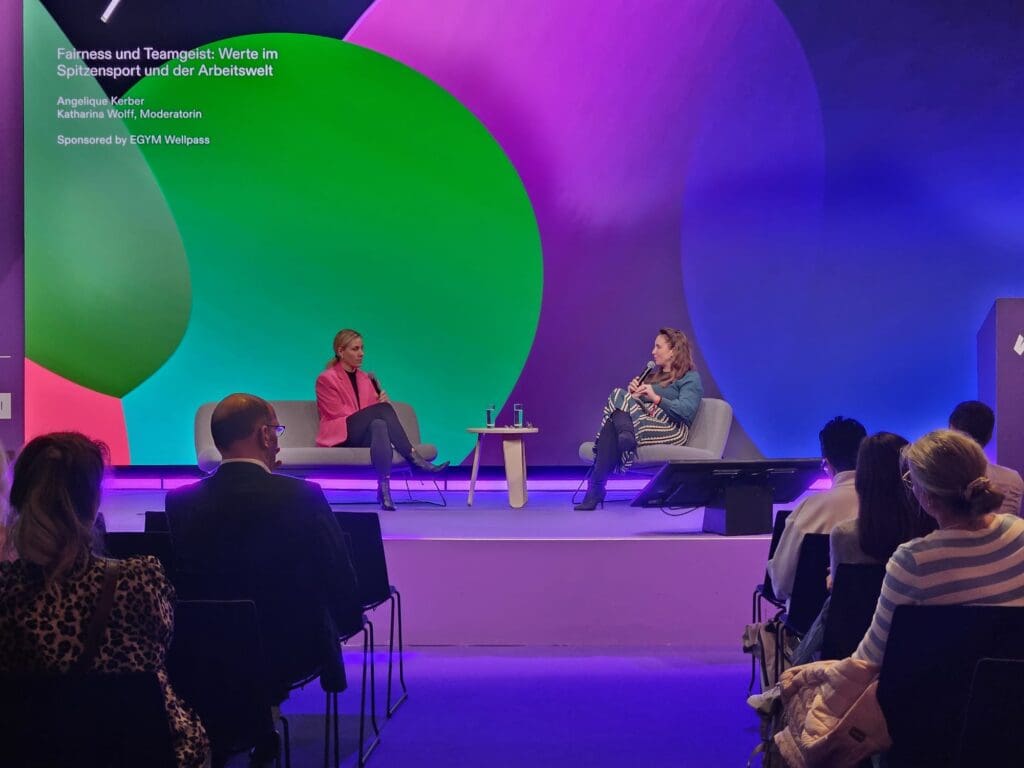
Three Grand Slam titles, victory at Wimbledon, the world number one ranking and an Olympic silver medal: in her 21 years on the tour, Angelique Kerber has won almost everything there is to win in tennis.
When she spoke to Katharina Wolff, editor of Strive magazine, at the Work Culture Festival at Orgatec in Cologne, the conversation centred less on trophies and more on her fascinating personal story – how she repeatedly managed to motivate herself to peak performance. It was about patience, setbacks and the question of how one learns to listen to oneself.
Kerber won her first Grand Slam title at the age of 28, which is late in the world of elite sport. That exceptional year of 2016 was followed by a slump. Suddenly, she was the one being hunted. Every defeat was criticised, and everyone wanted something from her. During this time, Kerber learnt to say no, to refocus on her strengths and to take things one step at a time, rather than measuring everything solely in terms of victory or defeat. Today, she is convinced that without that difficult year, her triumph at Wimbledon in 2018 would not have been possible.
“Without defeats and honest analysis, nobody gets better.”
She was supported by a small team that remained the same for many years. Whilst other players changed coaches every year, Kerber placed her trust in them. Criticism was expressly encouraged, though it had to be delivered tactfully and only a few hours after the match. Without facing defeat and honest analysis, she says, nobody improves.
Her gut feeling also became important to her. Whenever she went against it – for example, by playing a tournament even though she wasn’t ready – she regretted it. She honed her mental strength through experience and meditation. She wanted to stay in the here and now and not think about the point she’d lost or the next game.
After the birth of her daughter, Kerber returned to the tour, partly to show that motherhood and elite sport can go hand in hand. This changed her perspective on the sport, as there was now someone waiting at home who didn’t care about the result. She brought her career to a close at the Olympic Games in Paris. She chose the timing herself, rather than letting an injury or her ranking dictate it. It was the most difficult decision of her career and, at the same time, the right moment.
For the world of work, Kerber’s story shows that highlights often arise precisely from crises. Those who provide stability for their team, voice criticism judiciously and allow people to follow their instincts lay the foundations for top performance. This applies just as much on the tennis court as it does in the office.
Angelique Kerber – Sports Legend
On 7 November, she will receive the ‘Sports Legend’ award – we offer our warmest congratulations and thank Angelique and Katharina for the fascinating conversation at the Work Culture Festival.
Angelique Kerber is available for bookings as a speaker and panellist via LEADING MINDS: +49 (0)30 640 777 42 or [email protected]